Lebanon: An on-the-ground perspective from a Scout
In recent weeks, parts of the Middle East have been facing a deepening humanitarian crisis following the conflict which began in late February.
While the impact is felt across the region in different ways, parts of Lebanon in particular -- already navigating significant challenges -- have seen conditions worsen.
According to United Nations reports, over one million people in Lebanon have been forced to flee their homes as the crisis escalates. This includes approximately 367,000 children who have been displaced from their communities and can no longer attend school.
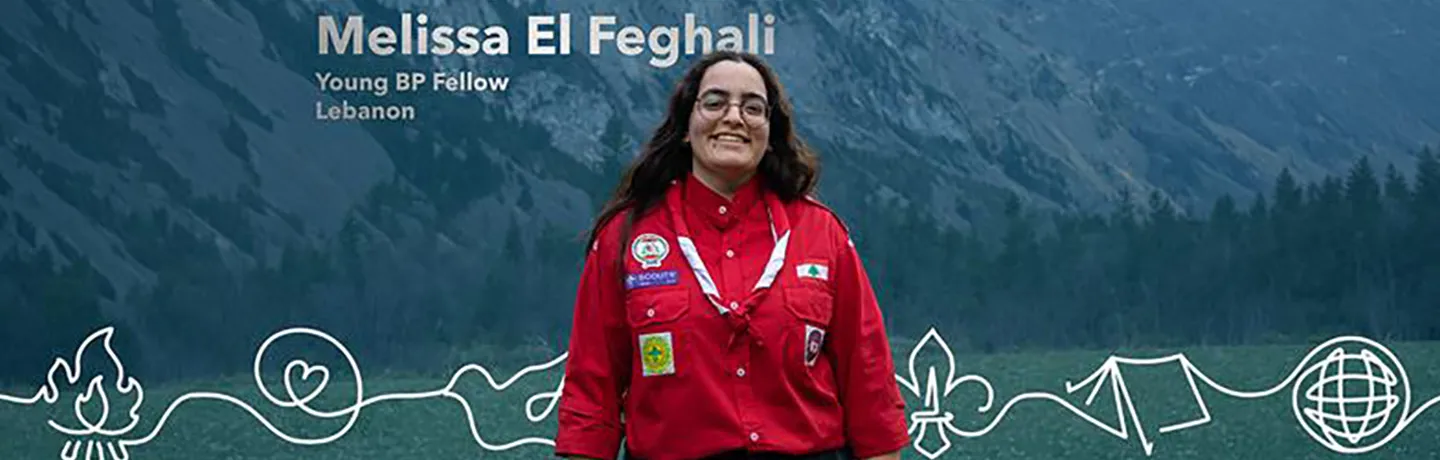
The conflict has left many people wondering how they can best support affected Scouts and communities. To find a more grounded perspective, our team reached out to Melissa El Feghali, a Young Baden-Powell Fellow and Former Global Youth Representative at World Scouting, to hear more about what she is experiencing as a Scout leader in her community in Lebanon.

Melissa (right) at the World Scout Foundation reception of the World Scout Moot 2025
What has the situation been like in your community since the conflict escalated?
Even from a distance, we hear the sounds of bombing, especially at night. That alone has had a deep impact on people. Many are struggling to sleep, constantly on alert, reacting to every sound. There is a sense of tension in daily life; people are more anxious, more withdrawn, and often prefer to stay at home rather than engage socially.
At the same time, people are experiencing this in very different ways. Some are visibly anxious and overwhelmed, while others seem almost numb or desensitised. But even in that numbness, there are a lot of unprocessed emotions. Many people don’t fully understand what they’re feeling, which makes it even harder to express or talk about it with others.
There is also a mix of reactions within the community. Some people feel a strong sense of urgency and responsibility to support those who have been displaced, and they are actively looking for ways to help. Others feel uncertain, overwhelmed, or disconnected, sometimes due to misinformation or simply not knowing how to respond, so they choose to step back.
Overall, it is a very heavy and complex situation. Even in areas that are not directly affected, the emotional and psychological impact is very real. And as the situation continues to escalate, combined with difficult weather conditions, there is a growing collective feeling that people want to support one another in any way they can.
The Lebanese Scout Federation has mobilised 10,000 adult leaders and volunteers to provide essential services and support to 26,000 families. Why were Scouts able to respond so quickly?
Scouts were able to respond quickly because, at our core, we are trained to act, adapt, and serve, often all at once.
We are a movement that is used to being organised, but also flexible. We go on the ground, we observe what is needed, and we start responding. From there, we continuously adapt, refine, and improve our approach. In emergency situations, you cannot afford to wait for perfect plans, you need to act, and that is something scouting prepares us for.
Another key factor is our presence across the country. Scouts are embedded in communities all over Lebanon, which makes it possible to mobilise quickly at a local level. There are always people on the ground who understand the needs of their communities, and who can connect with others to coordinate efforts, distribute support, and scale the response efficiently.
This also means our response is highly decentralised. We are not operating from a single location; scouts are active across multiple shelters, cities, and regions at the same time. Some teams are working directly on the ground supporting displaced families, while others are coordinating remotely, organising resources, and ensuring aid is delivered where it is most needed. This flexibility allows us to reach more people, faster.
Beyond the logistics and structure, it comes down to our values. In scouting, service is not optional, it is part of who we are. We grow up with a strong sense of duty: to others, to our communities, and to our country. So when a crisis happens, there is no hesitation or need for justification. We respond because it is simply what we are meant to do.
Why do you believe it’s important that we invest in youth and leadership development before a crisis happens?
It is often difficult to explain the importance of investing in youth and leadership development before a crisis, because the impact is not always immediately visible. You don’t always see the results in a tangible way, until a crisis happens. And when it does, the difference becomes very clear. In many ways, it is almost too late to start preparing people at that point.
When you invest in young people early on, you are equipping them with the skills they will need to respond when it matters most. This includes practical (skills) like organising, coordinating teams, assessing risks, mobilising support, and delivering aid. It also includes essential emergency skills such as first aid, basic response mechanisms, and understanding how to act in different types of crises.
Beyond technical skills, what is even more important is the mindset that is developed over time. Young people learn how to stay calm under pressure, how to process their own emotions while supporting others, and how to make decisions in uncertain and stressful situations. These are not things you can easily teach in the moment; they require experience, practice, and personal growth.
This kind of preparation builds confidence and a sense of capability....They don’t freeze or feel completely helpless; they step forward, take initiative, and try to find solutions.
Without that prior investment, people are more likely to feel overwhelmed and become the ones needing support rather than being able to provide it. And while that is completely human, it highlights why preparation matters.
At its core, this is what scouting stands for: being prepared. Not just in theory, but in practice—so that when a crisis happens, young people are not starting from zero, but from a place of readiness, self-awareness, and responsibility.


The impact by the Lebanese Scout Association as of March 2026.
What does it mean to you to see Scouts helping their communities during such a difficult moment?
Honestly, it means everything to me. I feel incredibly grateful to be part of a movement like this.
Seeing Scouts on the ground, helping others in the middle of all of this… it just fills me with so much pride and gratitude. I look at them and think, this is exactly why we do what we do. Not for big moments or recognition, but for times like these, when people need support, when communities are hurting, and someone has to step in and care.
It’s emotional because you see it in real life. You see young people and leaders showing up, giving their time, their energy, and their hearts to others, without hesitation. And it’s not something that was forced or instructed. It just comes naturally, because it’s part of who they are.
For me, it brings everything full circle. All the values we talk about, all the effort we put into shaping mindsets and building a sense of responsibility. It’s all there, in action. And in such a difficult moment, I don’t think I’ve ever felt more proud, or more certain, of what Scouting stands for and why it matters.
What inspired you personally to become a Young BP Fellow and support the World Scout Foundation?
Honestly, it came from a deep desire to give back.
Scouting has shaped who I am in every sense, and for a long time I knew that when I grow up, I want to give back to this movement and the young people in it through my role as a leader. But when I heard about the Young BP Fellowship, I felt like this was another way I could contribute. I’m at a point where I can do this, and I know it can make a difference.
I also find it really powerful that the Foundation is built on individuals who simply want to give back and support scouting globally, especially through initiatives like SANAD that are helping communities in countries like Lebanon and Palestine during crises.
For me, it just made sense. If you’re in a position to give back, why wouldn’t you?
_________________________________________________________________________________________________________
We believe a more peaceful and inclusive world starts with us. That belief inspired our new campaign, the King’s Appeal, an opportunity for you to empower Scouts like those in Lebanon to foster peace and support, where it’s needed most.
The King's Appeal is a time-bound, global campaign in honour of His Majesty The King of Sweden's nearly 50 years of service as Honorary Chairman of the World Scout Foundation and his 80th birthday. Your generous support will power Scout projects and initiatives that widen access to Scouting, nurture transformative youth leadership, and build peace and inclusion in communities affected by violence and exclusion.
